 ND
ND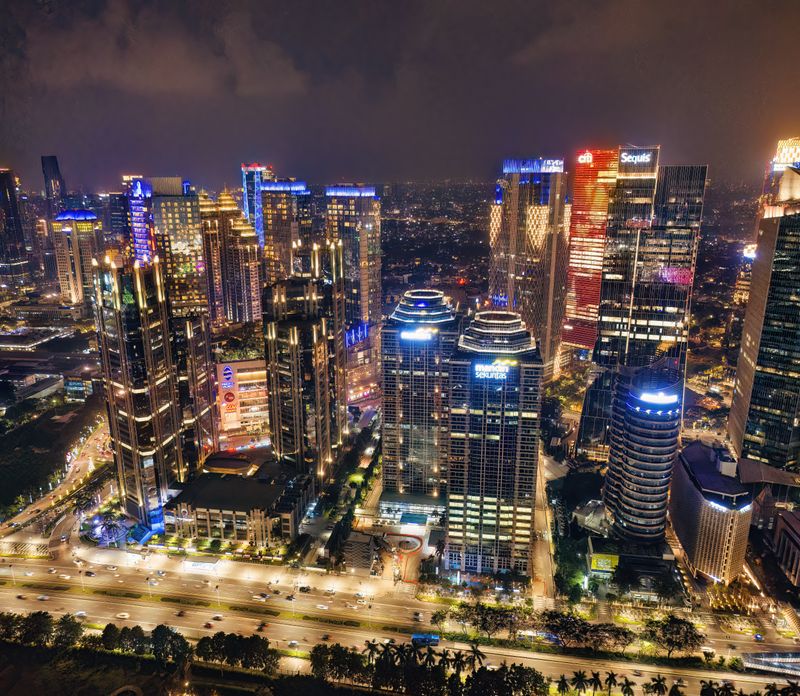
For nearly five centuries, Jakarta has stood at the center of Indonesia's political, economic, and cultural development.
Today, as the city marks its 499th anniversary, the celebrations carry a deeper meaning than tradition alone.
Jakarta is entering a new chapter.
With Indonesia gradually relocating its administrative capital to Nusantara, many observers have questioned what role Jakarta will play in the decades ahead.
The answer, increasingly, is becoming clear.
Rather than losing relevance, Jakarta may be transforming into something even more valuable: Indonesia's permanent financial and commercial capital.
That transition could reshape not only Indonesia's economy but also Southeast Asia's business landscape.
More Than a Capital City
Although government ministries are gradually moving to Nusantara, Jakarta continues to generate an outsized share of Indonesia's economic activity.
The metropolitan area remains home to:
Indonesia's largest financial institutions The country's main stock exchange Headquarters of major domestic and multinational corporations Leading universities and technology companies The largest concentration of startups and venture capital firms
According to official government data, Jakarta contributes around 16–17% of Indonesia's Gross Domestic Product, despite representing only a small share of the country's total land area.
That economic concentration places Jakarta among Southeast Asia's most important metropolitan economies.
A New Role in the AI Economy
The next challenge for Jakarta is no longer manufacturing.
It is digital infrastructure.
Artificial intelligence, cloud computing, fintech, and digital banking are transforming how businesses choose investment destinations.
Over the past two years, Indonesia has attracted increasing investment in:
Data centers Cloud computing Artificial intelligence Digital payment systems Financial technology
Many of those investments continue to flow into Greater Jakarta.
While cities such as Johor, Singapore, and Ho Chi Minh City are also competing aggressively for technology investment, Jakarta offers something few regional competitors can match.
Scale.
With a metropolitan population exceeding 30 million people, Jakarta provides one of the largest digital consumer markets in Asia.
For technology companies, that means infrastructure investments can support both domestic demand and regional expansion.
Can Jakarta Compete With Singapore?
Singapore remains Southeast Asia's leading financial center.
Its strengths include regulatory certainty, world-class infrastructure, and global connectivity.
Jakarta, however, competes differently.
Instead of positioning itself as a financial gateway, Jakarta is becoming a market-driven business ecosystem.
Indonesia's rapidly growing middle class, expanding digital economy, and young workforce continue attracting multinational companies seeking long-term growth rather than simply regional headquarters.
Meanwhile, Kuala Lumpur has strengthened its position as a technology and data center destination, while Bangkok continues investing heavily in advanced manufacturing and digital industries.
Rather than replacing these cities, Jakarta is increasingly becoming part of a network of specialized business hubs across Southeast Asia.
Challenges That Cannot Be Ignored
Despite its economic strengths, Jakarta still faces significant structural challenges.
Traffic congestion remains one of the city's biggest productivity concerns.
Flood mitigation continues requiring substantial infrastructure investment.
Air quality, public transportation, and affordable housing also remain important issues for both residents and investors.
In addition, the gradual relocation of government functions raises questions about how Jakarta will redefine its identity beyond being Indonesia's political center.
Successfully addressing these challenges will play a major role in determining whether the city can strengthen its international competitiveness.
The Opportunity Before Jakarta Turns 500
Next year will mark Jakarta's 500th anniversary.
For many cities, such milestones are symbolic.
For Jakarta, it could represent something more significant.
The city has an opportunity to redefine itself as:
Southeast Asia's largest digital economy Indonesia's financial capital A regional AI and data center hub A destination for global investment A gateway connecting international businesses with one of the world's largest consumer markets
Achieving those ambitions will require continued investment in infrastructure, regulatory reform, sustainability, and innovation.
But the foundations already exist.
Looking Ahead
Jakarta's 499th anniversary is more than a celebration of history.
It is a reminder that cities, like economies, evolve.
The question facing Jakarta today is not whether it will remain relevant after Indonesia's capital relocation.
The more important question is whether it can become something even greater.
As Southeast Asia enters a new era shaped by artificial intelligence, digital infrastructure, and regional investment, Jakarta has an opportunity to redefine its role—not only for Indonesia but for the entire Asia-Pacific economy.
Its first 499 years built one of Asia's largest cities.
The next century may determine whether it becomes one of Asia's most influential business capitals.