 ND
ND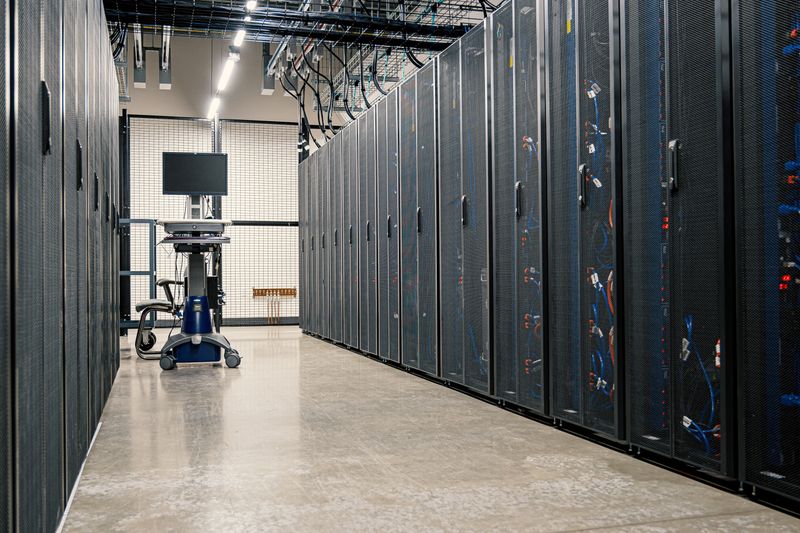
For years, Singapore dominated conversations about data centers in Asia.
Then Malaysia emerged as the region's fastest-growing hyperscale destination.
Now, another country is attracting the attention of the world's biggest technology companies.
India.
This week, Amazon announced an additional US$13 billion investment to expand artificial intelligence and cloud infrastructure across India by 2030, bringing its planned investment between 2026 and 2030 to US$48 billion. The expansion will primarily increase Amazon Web Services (AWS) data center capacity in Mumbai and Hyderabad, reinforcing India's growing role in the global AI economy.
The announcement is more than another technology investment.
It may represent one of the biggest shifts in Asia's digital infrastructure landscape.
AI Has Changed the Rules of Competition
A decade ago, technology companies chose locations primarily based on internet demand.
Today, they choose countries capable of supporting artificial intelligence.
Modern AI requires enormous computing resources.
Every AI chatbot, image generator, recommendation engine, and enterprise AI application depends on thousands of servers operating inside hyperscale data centers.
As demand for AI accelerates, cloud providers are racing to secure locations with reliable power, skilled talent, favorable regulation, and long-term growth potential.
India is increasingly checking every box.
Why Amazon Is Doubling Down on India
Amazon's latest investment is not an isolated decision.
Over the past two years, Microsoft has announced plans to invest US$17.5 billion in India's cloud and AI ecosystem, while Google previously committed around US$15 billion to expand AI infrastructure and data center capacity in the country.
This raises an important question.
Why are the world's largest cloud providers making similar decisions?
Several structural advantages stand out:
More than 1.4 billion people creating one of the world's largest digital markets. Rapid enterprise adoption of AI and cloud computing. A growing technology workforce. Government initiatives encouraging digital transformation. Expanding renewable energy capacity to support large-scale infrastructure.
Together, these factors make India increasingly attractive as a long-term AI infrastructure hub rather than simply a large consumer market.
The Real Business Is No Longer AI Software
Much of the public conversation around artificial intelligence focuses on chatbots and software.
Investors are increasingly paying attention to something else.
Infrastructure.
Every new AI application requires:
Data centers High-performance networking Advanced cooling systems Semiconductor supply chains Reliable electricity Fiber connectivity
Without this physical infrastructure, AI cannot scale.
That explains why Amazon's investment extends far beyond cloud services.
It represents a long-term commitment to building the backbone of India's digital economy.
What This Means for Asia-Pacific
India's rapid expansion is reshaping competition across Asia.
Singapore remains one of the region's most mature data center markets, but land availability and power constraints continue limiting future growth.
Malaysia has successfully attracted hyperscale operators thanks to lower operating costs.
Indonesia and Vietnam are accelerating investments through digital economy initiatives and AI-focused policies.
Now India is positioning itself as another major destination—not just for regional cloud demand, but potentially for global AI workloads.
Rather than replacing other APAC markets, India's growth could strengthen Asia's position as one of the world's largest AI infrastructure regions.
Jobs, Investment, and the Next Digital Economy
Large-scale data center projects generate far more than server capacity.
They create demand across multiple industries, including:
Engineering Construction Renewable energy Telecommunications Cybersecurity Facility management Semiconductor supply chains
Amazon also said its broader investment strategy is expected to support millions of jobs over time while helping expand digital services for businesses, startups, and public-sector organizations.
For investors, the implications extend beyond technology stocks.
Companies supporting AI infrastructure—from utilities to networking providers—could increasingly benefit as hyperscale investment accelerates.
Could India Become Asia's Largest AI Hub?
That question no longer seems unrealistic.
The combined commitments from Amazon, Microsoft, and Google suggest that India is evolving into one of the world's largest AI infrastructure investment destinations.
Success, however, will depend on several factors:
Reliable electricity supply Faster infrastructure development Regulatory certainty Skilled workforce availability Sustainable energy expansion
Countries that can balance these elements will likely attract the next wave of AI investment.
Looking Ahead
Artificial intelligence is creating a new economic competition across Asia-Pacific.
The winners may not necessarily be the countries developing the smartest AI models.
Instead, they may be the countries building the infrastructure that powers them.
Amazon's latest investment suggests India intends to compete at the highest level.
As hyperscale companies continue expanding across the region, Asia's next digital superpower may not be defined by software alone—but by the data centers, cloud infrastructure, and AI ecosystems built behind the scenes.